
The Mechanics of Leveraging Community Wealth
Wednesday, March 11, 4:30-6 PM
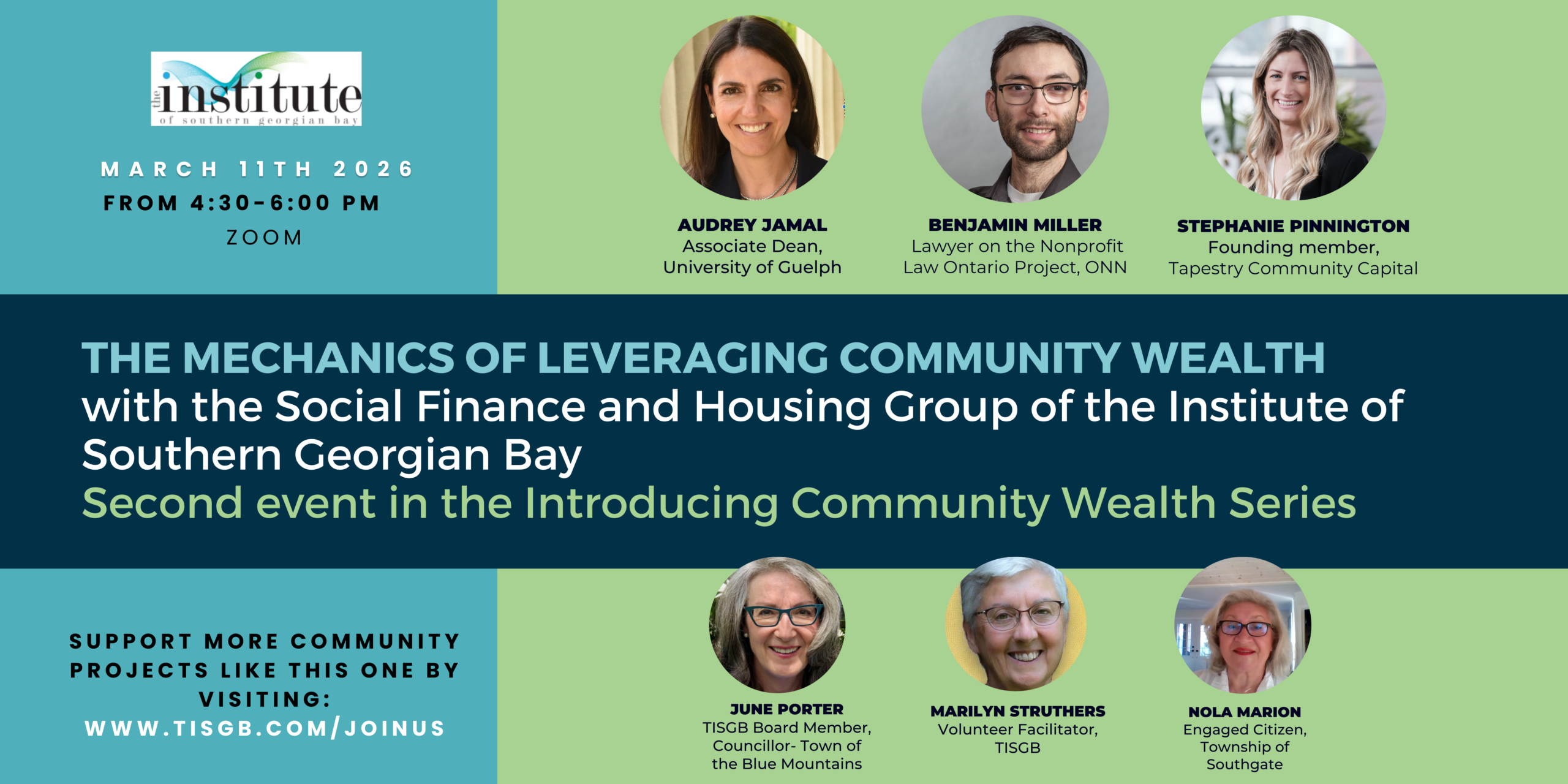
A priority area for the Institute’s Social Financing and Affordable Housing Group is learning how to Leverage Community Wealth for Affordable Housing.
On Wednesday, March 11th, 2026 from 4:30 to 6 pm, The Institute’s Social Financing and Affordable Housing Group hosted its second online event in our 3-part series. The focus of this event explored the mechanics of Community Wealth strategies now being used by non-profit organizations, charities and housing developers who are committed to affordable housing. Presenters identified ways that communities are leveraging their existing community wealth for good, including creating affordable housing.
Traditional financing and local government policy have relied heavily on the private market to provide adequate housing for the people who live and work here–yet this system has failed to deliver affordable housing for all households, especially those working in lower- income sectors. In part 1 of this series you learned what Community Wealth is, plus why communities are learning to use it to create affordable “non-market” housing.
More than 55 participants, representing various sectors and counties, attend Part 2 of this series exploring the mechanics and emerging ideas of how a system-changing economic model can redirect wealth and control of assets back into the community, as well as practical tools that communities are using to solve for enough affordable housing.
We continued to advance the concept of the Whole Community Approach to Housing created in cross-sectoral discussion right here, calling on support of all community sectors to leverage the wealth of our community to increase our supply of non-market housing; housing affordable by mission rather than market.
Highlights of the Event
- Dynamic presentations demonstrating real-life examples of community wealth building using community bonds, and the potential of charities and non-profits to lead in place-based economics led to a vibrant ‘Q & A’ exchange.
- Consultation around the benefits of collaboration regionally to achieve scale
- Benefits of building capacity and expertise via a Community Development Organization tasked with leveraging community wealth mechanisms such as land trusts, co-ops increasing access to land and capital for affordable homes.
- The benefits of collaboration among institutions, communities and individuals for affordable housing (local, provincial and federal levels).
- The need to support our “non-market” housing providers
- Hearing how federal and provincial policies and funding will impact our rural municipalities; learning about progress in various rural municipalities.
Guest Speakers
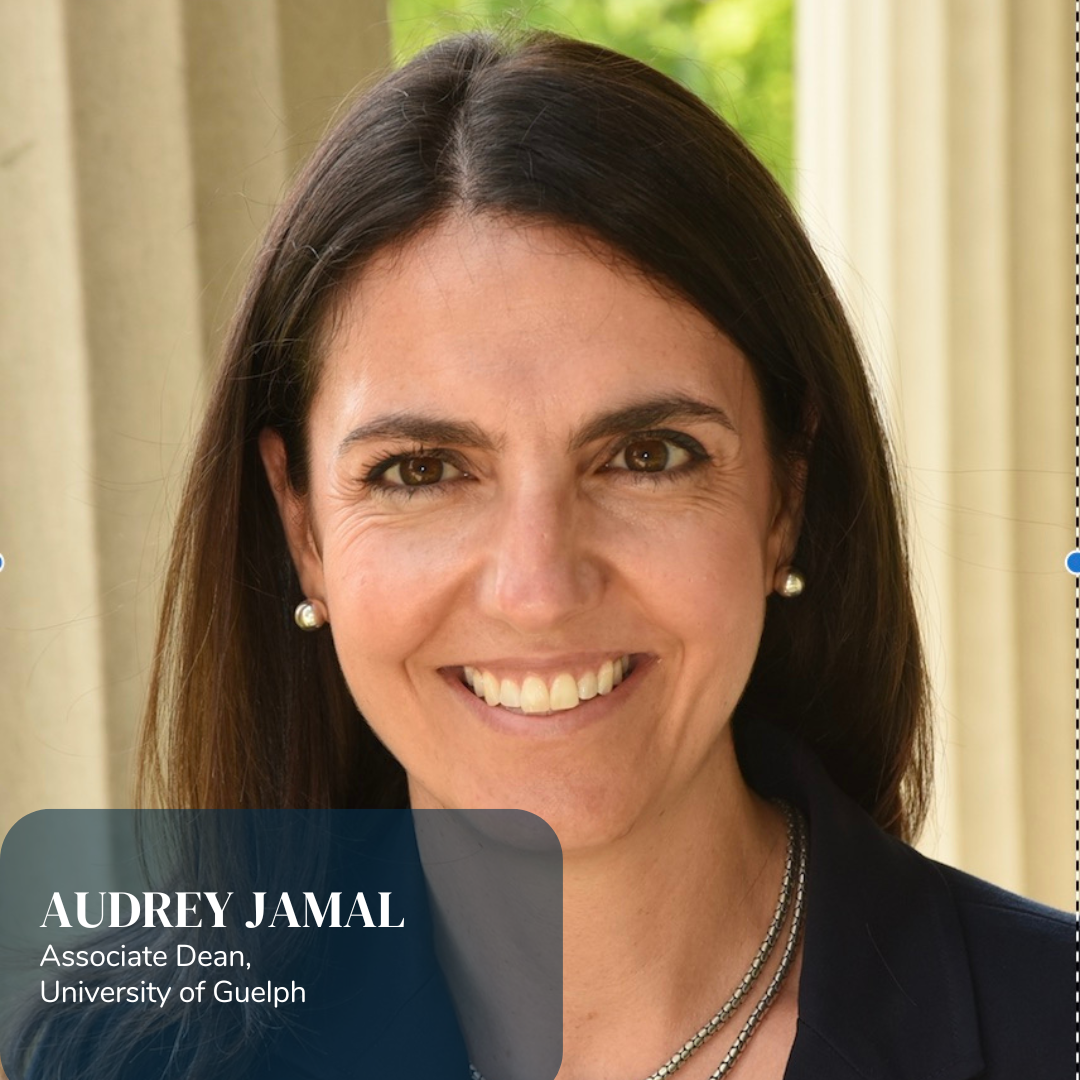
- Audrey Jamal, from the University of Guelph shared current learning on place-based economies and retaining local wealth in our communities. Dr. Jamal is the Associate Dean, Strategic Partnerships and Societal Impact, in the Gordon S. Lang School of Business and Economics. She teaches graduate and undergraduate courses in sustainability, social entrepreneurship, and nonprofit leadership. Audrey is a community-engaged researcher. Her research focuses on the role of community engagement in advancing local economic development. Her research is framed through a community wealth building lens and explores social and community finance, downtown revitalization and economic renewal, and community-led economic development strategies. Audrey collaborates with a range of partners on research related to place-based strategies to build more sustainable and equitable economies. She earned her Ph.D. (Urban Planning) from the University of Waterloo and holds a M.A. (Conflict Analysis and Management) from Royal Roads University. Prior to joining Lang, Audrey served as the Chief of Staff in the Office of the President at the University of Guelph. She has also held executive roles in the non-profit sector.
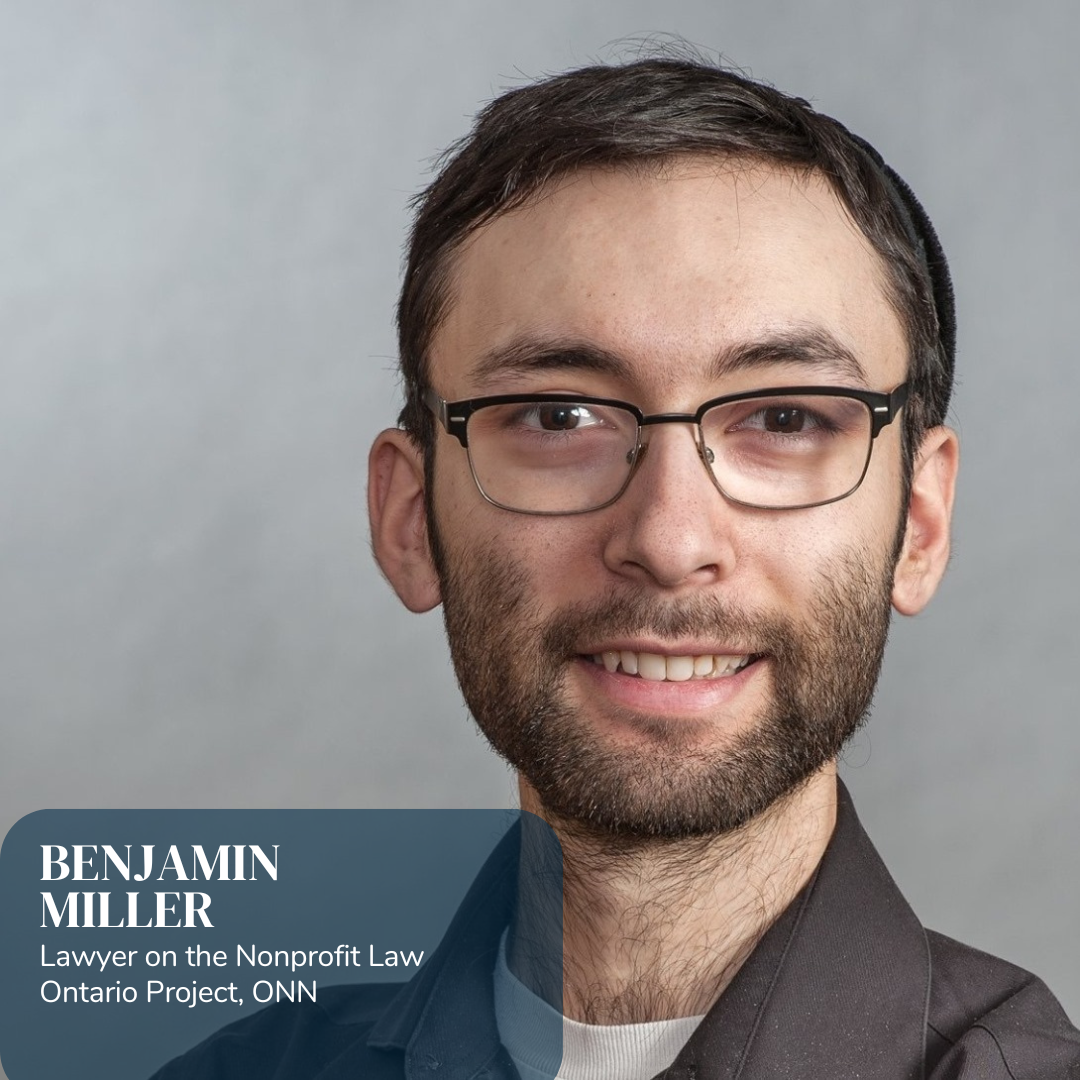
- Benjamin Miller, lawyer (he/him) from ONN shared learning about the potential of charities and non-for-profits; and how they can have a bigger role in community financing than we might think. Benjamin is a staff lawyer on the Nonprofit Law Ontario project where he focuses on the legal needs of nonprofits and charities. Over the past 8 years, Benjamin has answered thousands of nonprofit law questions, developed and delivered hundreds of workshops, and developed online interactive tools, including a bylaw builder for the ONCA. Benjamin holds a JD and MPP from the University of Toronto and an MA in political theory from the University of Ottawa.
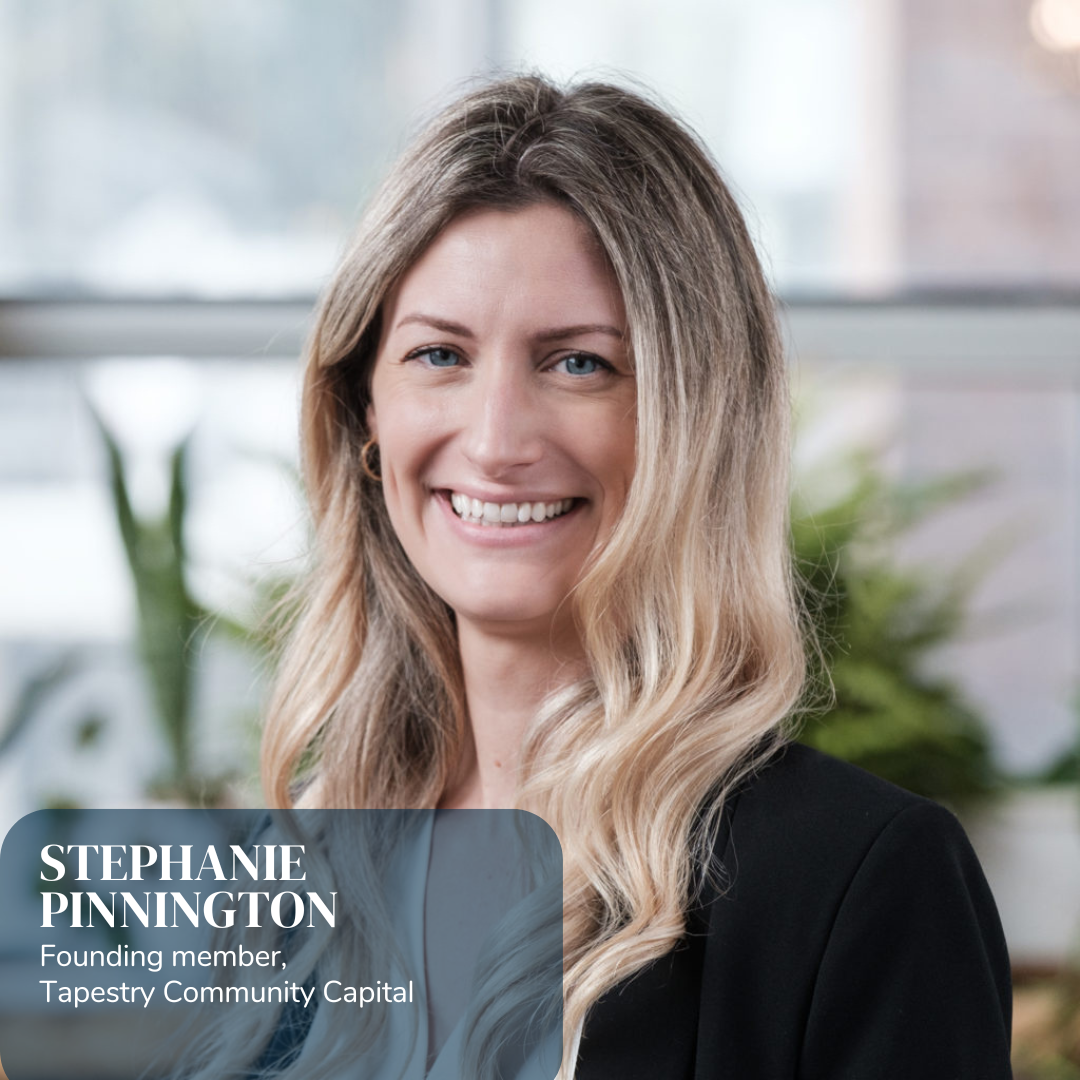
- Stephanie Pinnington, of Tapestry Community Bonds. Stephanie is a social finance leader with a deep commitment to community-led development. As a founding team member of Tapestry Community Capital, she has helped scale the community bond model across Canada by forging strategic partnerships and driving national awareness. She brings over a decade of experience in international development and sustainability, with a track record of leading complex initiatives for organizations like the World Bank and the International Renewable Energy Agency.
Some Perspective on The Whole Community Approach
In addition to guest presenters, the following community speaker provided clarity around the evolution of The Whole Community Approach:
- Stuart Reid, Community Foundation Grey-Bruce- shared how The Social Finance and Housing Group, hosted by the Institute, represents a 4-year coalition of community organizations, local government and concerned citizens gathering to consult about the housing crisis and its root causes. The solutions to this crisis will require collaboration across sectors and the region. Collaboration is essential to building our capacity to create enough affordable housing.
Key Takeaways
- We are not the only communities thinking about community wealth strategies to solve for affordable housing. We are part of a growing movement across Canada.
- Our Nonprofits can do much more around financing than we think. Nonprofits & charities can use many of the same financial structures as business, just structured to put a priority on community benefit and mission.
- New financial tools such as community bonds are the result of communities organizing around local issues (CBs began with local investment in a windmill on TO’s Lakeshore). Tapestry Capital, the CB distributor that resulted is a social enterprise, helping communities to invest in local housing.
Next Steps
The Institute’s Social Finance and Affordable Housing Group is committed to building out The Whole Community Approach by bringing the community together to “roll up our sleeves” in 2026 by creating the required organizations and providing more events and opportunities for the community to understand and participate in community wealth building for affordable housing.
Thank you to all attendees, speakers, and contributors for making this event a success.
Leveraging community wealth increases our region’s potential to deliver affordable housing. Without housing that workers can afford, workers cannot afford to live where they work, and business doesn’t thrive impacting the whole community.
We believe that Southern Georgian Bay can meet today’s needs of the planet, its people, and economic vitality…without compromising the needs of future generations.
Please subscribe to the Institute’s newsletter, stay connected, and receive updates on events and collaborative projects by TISGB.